
Contents
Just as you notice a damp wall, a pipe burst can release moisture into hidden areas fast. You need to shut off the water, document the damage, and inspect wall cavities, insulation, and nearby surfaces for mold indicators. A Burst Pipe Mold Inspection can help identify hidden moisture and determine whether mold has already started to grow. If odors, staining, or delayed drying appear, you may need testing to confirm contamination and guide remediation before the problem expands.
Key Takeaways
- Shut off water, document damage, and dry the area immediately with fans and dehumidifiers.
- Inspect hidden spaces like wall cavities, baseboards, subfloors, insulation, and behind appliances for trapped moisture and mold.
- Look for warning signs such as musty odors, discoloration, visible growth, condensation, and swollen trim.
- Test mold with air samples, swabs, tape lifts, or bulk samples, especially near wet walls and framing.
- Call a professional if moisture lasts over 24 to 48 hours, mold is widespread, or occupants have health symptoms.
What to Do After a Burst Pipe?
If a pipe bursts, you should shut off the main water supply immediately, cut power to affected electrical areas if it’s safe to do so, and document the damage before beginning cleanup.
You should then contact a qualified water damage professional and your insurer without delay. These immediate actions reduce structural deterioration and support accurate insurance claims.
Remove standing water with appropriate extraction equipment, then place fans and dehumidifiers to stabilize conditions. Protect unaffected belongings by relocating them from the wet area.
Inspect the plumbing source for an active leak only if you can do so safely. Keep a written log of dates, photographs, and communications.
Where Mold Hides After Water Damage
After water intrusion, mold often develops in concealed, low-visibility areas where moisture lingers and airflow is limited.
You should inspect hidden spaces such as wall cavities, baseboards, subflooring, insulation, cabinet backs, and the voids around plumbing penetrations. These locations act as moisture traps, especially when saturated materials remain undried after a burst pipe.
In your space, warm air and organic dust can accelerate colonization on drywall, wood framing, and carpet padding.
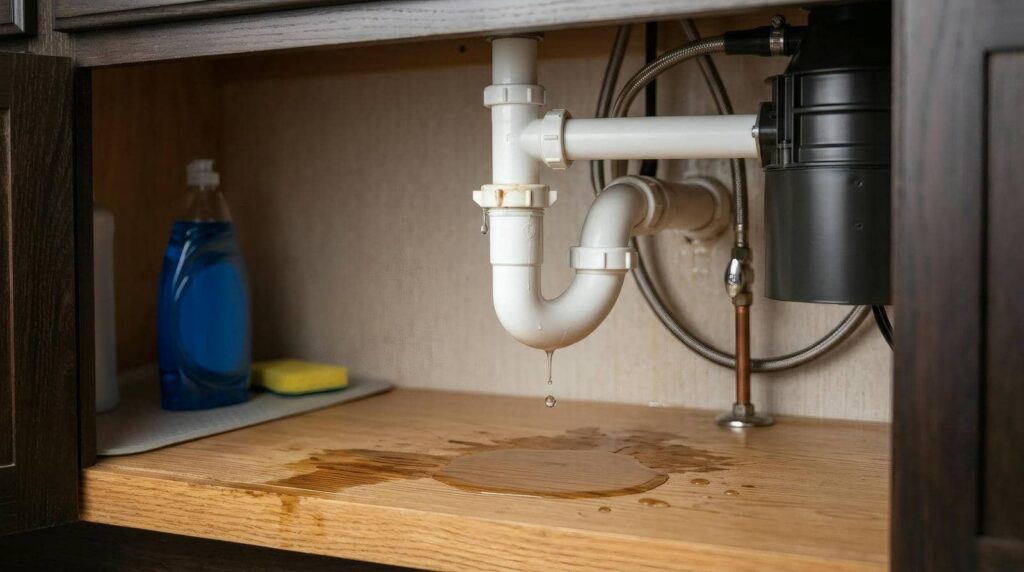
You’ll also find risk behind appliances, under sinks, inside ceiling assemblies, and beneath flooring junctions where evaporation is slow.
Because mold can spread into shared structural materials, you need a methodical inspection strategy.
When you understand these concealed pathways, you’re better prepared to protect your home and restore a safe environment.
Signs You Need Mold Testing After a Burst Pipe?
After a burst pipe, you should arrange mold testing if you see visible mold growth, especially on drywall, framing, or insulation.
You should also test if you detect a persistent musty odor, since it often indicates concealed fungal activity.
Ongoing moisture signs, such as damp materials, staining, or repeated condensation, mean conditions still support mold development.
Visible Mold Growth
Visible mold growth is one of the clearest indicators that a burst pipe has created conditions requiring professional mold testing.
You should inspect affected surfaces closely, because different mold types can colonize drywall, wood, and insulation within days. When you see discoloration, texture changes, or clustered spots, you’re already dealing with contamination that may raise health risks for occupants.
- Dark speckling along baseboards after water exposure
- Fuzzy patches spreading across ceiling corners or wall seams
- Green, black, or white colonies behind damaged materials
You belong to a group of property owners who act early and document findings before cleanup begins.
Prompt testing confirms the scope, guides remediation, and helps you protect your indoor environment with confidence.
Persistent Musty Odors
Persistent musty odors often signal hidden mold growth after a burst pipe, even when surfaces look clean or repairs have already started. You should treat this as a diagnostic cue, not a minor nuisance.
Odor can travel through cavities, insulation, and ductwork, so you may detect musty odor sources beyond the visible damage. If the smell lingers after basic drying, you likely need professional mold testing to confirm whether colonies remain in concealed materials.
Effective persistent odor solutions depend on identifying and removing the contaminated source, not masking the air. In a well-managed remediation plan, you’ll protect your home, your indoor air quality, and everyone who shares the space with you.
Early testing helps your team move forward with confidence and precision, instead of guessing at the problem.
Ongoing Moisture Signs
If dampness keeps returning on walls, baseboards, flooring, or insulation after cleanup, you likely have ongoing moisture that can sustain mold growth and justify mold testing.
You should inspect for moisture detection indicators such as swollen trim, cool spots, or recurring stains. Use a calibrated meter and verify humidity control, because elevated indoor humidity can hide water behind finishes.
- A dark line spreading along a baseboard.
- Paint blistering beside a window frame.
- Insulation sagging in a damp cavity.
If you notice these patterns, you’re not overreacting; you’re protecting your space and your people.
Schedule testing promptly, document findings, and correct the water source before cleanup fails again.
When to Call for Professional Mold Testing?
When should you call for professional mold testing after a burst pipe? You should act as soon as moisture persists beyond 24 to 48 hours, or when you notice musty odors, visible growth, or warped materials.
Professional testing is essential if you can’t identify mold types, if contamination covers a broad area, or if hidden cavities stayed wet. You also need testing when occupants report health effects, such as coughing, irritation, or headaches, because these signs can indicate exposure that basic cleaning won’t resolve.
If your home includes shared walls, HVAC concerns, or repeated leaks, expert assessment helps you protect your space and your household.
How Mold Testing Works After a Burst Pipe?
After a burst pipe, you’ll see mold testing begin with targeted sample collection from visible growth, suspected materials, and adjacent air zones.
You’ll typically use swabs, tape lifts, bulk samples, or air cassettes to capture representative evidence of contamination.
The lab then analyzes each sample to identify mold type, quantify spore load, and determine whether moisture-related amplification has occurred.
Sample Collection Methods
During a post-burst pipe mold inspection, a technician typically collects multiple sample types to determine whether hidden growth is present and how extensive it is.
You’ll see sample collection techniques tailored to the affected materials, and the technician uses calibrated mold sampling equipment to gather reliable evidence without disturbing the site more than needed.
- Air samples near wet walls capture suspended spores.
- Swab samples from framing or drywall target visible residue.
- Tape-lift samples from stained surfaces preserve surface patterns.
You can expect the technician to label each sample, note exact locations, and document moisture conditions so your team stays aligned on findings.
This methodical process helps you understand the scope of concern and supports confident next steps after the burst, while maintaining technical precision and a professional standard throughout.
Lab Analysis Process
Once samples reach the laboratory, analysts examine them under controlled conditions to identify mold species, estimate spore concentration, and compare results against established reference data.
You’ll see technicians prepare each sample using calibrated lab equipment, then apply testing protocols such as microscopy, culture plating, or PCR analysis when needed. These methods let you distinguish active contamination from incidental debris and determine whether the burst pipe created a sustained moisture problem.
Your report should include organism names, counts, and any limitations that affect interpretation. Because you’re part of a careful remediation process, this data helps your inspector prioritize affected materials and recommend targeted cleanup.
Informed results support decisive action, reduce uncertainty, and help you move forward with confidence.
What Your Mold Test Results Mean?
What do your mold test results actually tell you? They identify whether elevated spores remain after a burst pipe, and which mold types dominate your indoor environment.
You should compare results with the control sample and note concentration, species, and location. Different testing methods, such as air sampling or surface swabs, measure distinct conditions, so your report must be read in context.
A positive result doesn’t automatically mean severe contamination; it means you need to interpret risk carefully with the assessor’s notes. You belong in a process that uses evidence, not guesswork.
- A dark stain on drywall can indicate active growth.
- A petri dish may show clustered colonies.
- A spreadsheet can reveal indoor counts above background.
How to Prevent Mold After Pipe Repair
After the pipe is repaired, you should dry all affected materials immediately and verify that moisture levels return to normal.
Use dehumidifiers, air movers, and ventilation to remove residual dampness from walls, flooring, and insulation.
Inspect hidden cavities, since trapped moisture can sustain fungal growth.
Apply mold prevention strategies by cleaning nonporous surfaces with an approved antimicrobial solution and discarding porous materials that remain saturated.
Monitor humidity below 60 percent and confirm that leaks don’t recur at joints, valves, or fittings.
Schedule post repair maintenance with routine inspections during the first 30 days, because early detection limits contamination.
If you notice musty odors, discoloration, or condensation, act at once.
Frequently Asked Questions
Can Burst Pipe Water Damage Affect Indoor Air Quality Immediately?
Yes, burst pipe water damage can affect your indoor air quality immediately. You can release moisture, aerosolized contaminants, and odors that alter air quality fast, and untreated water damage may quickly promote microbial growth.
Is Mold Testing Needed if the Pipe Burst Was Cleaned Quickly?
You may not need mold testing if you cleaned the burst pipe quickly, but you should still complete a water damage assessment and apply mold prevention strategies. If moisture remained, you’ll want targeted testing.
How Long After a Burst Pipe Should Testing Be Scheduled?
Sooner’s better: you should schedule testing within 24–48 hours after a pipe burst response, because the mold growth timeline can start quickly. You’ll protect your space, confirm conditions, and fit in with standards.
Can Hidden Mold Grow Inside Walls After a Small Leak?
Yes, hidden mold can grow inside walls after a small leak if moisture lingers. You should use leak detection quickly, because concealed cavities trap dampness, and you’ll protect your home and community from further contamination.
Does Homeowners Insurance Cover Mold Testing After Pipe Damage?
Usually, you’ll get coverage if pipe damage caused the mold concern, but not always. Many claims hinge on cause and timing; you should file insurance claims promptly and document mold remediation testing carefully.
Conclusion
After a burst pipe, you must act quickly: shut off the water, document the damage, and inspect the hidden spaces where mold hides. If you notice musty odors, discoloration, or persistent dampness, you should schedule professional testing. When results arrive, use them to guide cleanup and repair. Then you can prevent recurrence with prompt drying, sealing, and monitoring—because when water lingers, mold follows.
Recent Posts
24/7 Water Damage Cleanup Checklist
At 2 a.m., you notice water pooling under your laundry room wall, and you have
What Is 24 Hour Water Damage Cleanup?
If you’re dealing with a water emergency, 24 hour water damage cleanup gives you immediate
Ceiling Leak Mold Inspection Report Guide
If you’re dealing with a ceiling leak, you need to know how mold can develop,