
Contents
Many water-damaged buildings develop hidden mold within days, so you can’t rely on visible signs alone. Best Mold Inspection Testing combines targeted methods that check the air for airborne spores, examine surfaces for visible growth, measure moisture inside materials, and use thermal imaging to locate concealed wet areas. Each test answers a different question, and the right combination can help reveal what’s spreading behind walls before it becomes a larger problem.
Key Takeaways
- Test for mold within 24 to 48 hours after water damage to catch early growth.
- Use air testing to detect hidden mold spores and compare indoor levels with outdoor samples.
- Inspect visible surfaces like drywall, baseboards, flooring, and insulation for discoloration or fuzzing.
- Use a moisture meter to find damp materials and track drying progress accurately.
- Scan with thermal imaging to locate hidden moisture, then confirm findings with visual and moisture tests.
When Mold Testing Is Worth It After Water Damage
If water damage has soaked materials for more than 24 to 48 hours, mold testing is often worth doing because growth can begin before visible staining appears.
You should act when porous materials stayed wet, odors persist, or cleanup was delayed. Testing helps you confirm whether mold growth is developing in your space and whether the problem is serious enough to warrant professional remediation.
It also helps you evaluate health risks for people with allergies, asthma, or weakened immunity. If you live with family, roommates, or coworkers, clear results can guide safe next steps and keep everyone aligned.
Don’t wait for obvious discoloration; hidden contamination can spread behind walls, under flooring, and inside insulation. Early testing gives you evidence, direction, and peace of mind.
Test the Air for Hidden Mold
When visible damage is limited, air testing can reveal mold spores that have spread beyond the wet area and into hidden cavities, HVAC systems, or adjacent rooms.
You’ll want a certified inspector to collect outdoor and indoor samples, then compare counts and identify mold types. That comparison helps you spot abnormal concentrations before they become a larger problem.
If your home smells musty or occupants report congestion, headaches, or throat irritation, you shouldn’t ignore the health risks.
Air testing won’t show every source, but it can confirm whether contamination is airborne and whether remediation needs to expand.
For families who want a safer space, this step gives you objective data, clearer next actions, and confidence that you’re addressing the right hazard.
Check Surfaces for Visible Mold
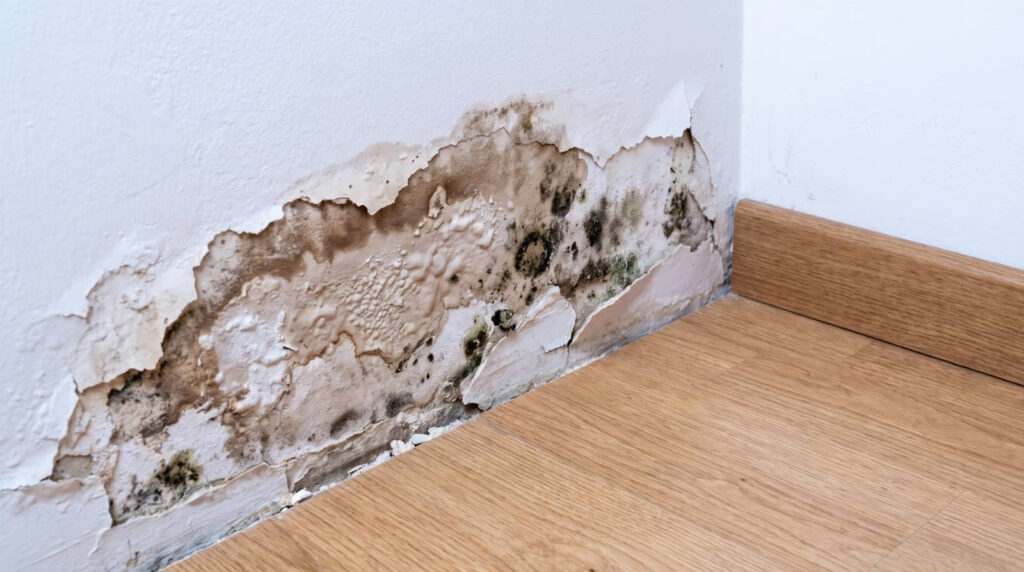
Inspect visible surfaces for staining, growth, or moisture patterns on drywall, baseboards, flooring, framing, and insulation, since these areas often reveal where water damage has already supported mold colonization.
You should document any discoloration, fuzzing, spotting, or musty residue and compare it with known mold types such as Aspergillus, Cladosporium, and Stachybotrys.
Use systematic inspection methods: scan room edges, behind trim, under damaged materials, and around penetrations where water often enters.
Don’t ignore small patches; they can signal broader contamination. You’ll protect your team’s shared standards by noting location, extent, and material condition before cleanup starts.
If growth appears active, assume nearby surfaces may also be affected.
Careful visual review helps you separate superficial staining from biologic growth and guides the next testing step.
Find Damp Areas With a Moisture Meter
Use a moisture meter to map damp zones in drywall, framing, subfloors, and trim before you assume the visible damage tells the full story.
You’ll get reliable moisture detection by probing clean, sound material and comparing readings against a dry baseline. Check each suspected area in a tight grid, then confirm any elevated value from multiple directions.
Keep your equipment calibration current, because a drifting meter can mislead your inspection and weaken your next decision. Record exact readings and locations so you can track drying progress and spot persistent wet pockets.
When you work methodically, you join a disciplined process that protects your space and helps your team target remediation with confidence, speed, and accuracy.
Use Thermal Imaging to Find Hidden Moisture
Thermal imaging can reveal temperature anomalies that often point to hidden moisture behind walls, under flooring, and above ceilings. You can trust this noninvasive tool to guide targeted mold inspection testing after water damage. It helps you identify suspect zones before you open finishes, reducing unnecessary demolition and cost.
- Scan systematically to map cooler, damp areas.
- Compare readings with known dry surfaces for context.
- Confirm findings with a moisture meter and visual inspection.
These moisture detection techniques give you a faster, more accurate picture of concealed water intrusion. The main thermal imaging benefits are speed, precision, and early intervention.
When you use them with your inspection team, you stay informed, protect your property, and belong to the group of owners who act before mold spreads.
Frequently Asked Questions
How Soon Should I Test for Mold After Water Damage?
You should test within 24–48 hours after water damage. Mold growth timeline starts fast, and water damage factors like warmth, humidity, and porous materials can accelerate contamination. Act quickly, and you’ll protect your space and your people.
Can Mold Testing Confirm Health Risks in My Home?
No, mold testing can’t confirm your health risks alone. You can identify mold spores and likely exposure, but health effects depend on dose, sensitivity, and duration—so, by Merlin’s beard, you’ll still need medical evaluation.
Should I Hire a Professional or Use a DIY Mold Kit?
You should hire a professional for reliable mold detection methods; DIY mold kits can miss hidden growth after water damage. You’ll get sharper results, better guidance, and confidence you’re protecting your home and family.
How Often Should Mold Testing Be Repeated After Cleanup?
After cleanup, you should repeat mold testing once in 1–2 weeks, then monthly until conditions stabilize; for example, after a flooded basement, your inspection frequency should reflect mold growth factors like humidity and leaks.
Does Homeowners Insurance Cover Mold Inspection Costs?
You’ll usually find homeowners insurance doesn’t cover mold inspection costs unless your insurance policies include mold coverage or the inspection follows a covered water loss. Review exclusions, limits, and reporting deadlines to verify eligibility.
Review
After water damage, you should test quickly because mold can spread before you see it. Air testing helps you detect hidden spores, surface checks confirm visible growth, moisture meters locate damp materials, and thermal imaging reveals concealed leaks. For example, if drywall stays wet behind a baseboard after a pipe break, mold can develop unnoticed within days. Use these methods together so you can target remediation, protect occupants, and reduce future damage.
Recent Posts
What Is 24 Hour Water Damage Cleanup?
If you’re dealing with a water emergency, 24 hour water damage cleanup gives you immediate
Ceiling Leak Mold Inspection Report Guide
If you’re dealing with a ceiling leak, you need to know how mold can develop,
5 Tips for Mold Inspection Reports
When you review a mold inspection report, you need to check more than just the