
Contents
A flooded room can look minor at first, then turn severe within hours. You need to stop the water, protect the space, and start drying fast to limit structural damage and mold growth. In a 24/7 water damage repair scenario, every step matters, from extracting standing water to checking hidden moisture in walls and ceilings. The right response now can spare you a much bigger problem later.
Key Takeaways
- Shut off the water source immediately and keep everyone away from wet, unsafe areas.
- Unplug nearby electronics and check for slipping hazards, debris, or sagging ceilings.
- Move furniture and valuables out of the water and document damage with photos.
- Remove standing water quickly, then use fans, dehumidifiers, and open doors for drying.
- Call 24/7 professionals for burst pipes, widespread damage, or possible mold after 24–48 hours.
Stop the Water and Secure the Area
First, shut off the water at the main valve or the nearest fixture supply to stop the damage from spreading.
Then identify the water source and confirm it’s fully closed; if you can’t isolate it, contact building maintenance or your utility provider.
Next, unplug electrical devices near wet surfaces and keep hands dry while you work.
Check for slipping hazards, sharp debris, or ceiling sag, and mark off the affected space to maintain area safety.
Move family members and pets away from the zone so everyone stays clear and calm.
If water is still entering, don’t force entry into unsafe rooms.
You’re taking the right first steps: controlled shutdown, clear boundaries, and careful observation protect your home and help the response stay organized.
Prevent More Damage Until Help Arrives
While you wait for repairs, focus on limiting the spread of water and protecting materials you can still save. Move furniture, rugs, boxes, and electronics away from wet zones, and place aluminum foil or plastic under legs that can’t be relocated.
If you can safely do so, blot standing moisture with clean towels and swap them often to avoid redepositing water. Open cabinet doors and closet doors to reduce trapped humidity around nearby contents.
Use temporary measures like blocking doorways with towels to keep water from reaching dry rooms. Document visible damage with photos before you move items.
These immediate actions help you stay in control, protect your space, and support the crew when they arrive. You’re not alone; small steps now make recovery easier later.
24-Hour Water Damage Removal and Drying
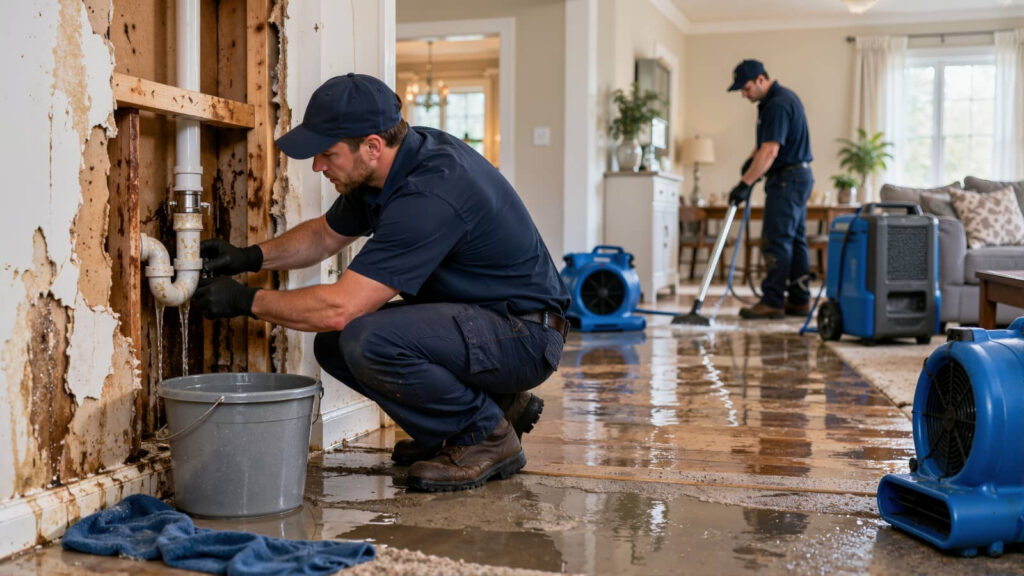
Within the first 24 hours, fast removal and drying are critical to limit swelling, staining, mold growth, and structural damage. You should launch an emergency response by extracting standing water, then deploying air movers and dehumidifiers to accelerate evaporation.
Remove saturated rugs, cushions, and loose materials so airflow reaches hidden moisture. Use moisture meters to track progress and target wet walls, floors, and trim with calibrated drying techniques. Keep indoor humidity low and maintain steady ventilation to prevent condensation.
You’re not dealing with this alone; a coordinated response helps your space recover cleanly and safely. Continue monitoring until materials return to normal moisture levels, then verify that surfaces feel dry and stable before you move on to detailed inspection and repairs.
Check Burst Pipe and Ceiling Leak Damage
Check burst pipes and ceiling leaks immediately so you can stop the source and limit hidden damage.
Shut off the nearest water valve, then perform a careful pipe inspection for splits, loose joints, and corrosion. Look for dripping, staining, or sagging around fixtures and walls.
Next, complete a ceiling assessment from below: note bulges, discoloration, peeling paint, and any fresh moisture at seams or light openings.
If the ceiling sounds soft or shifts under pressure, keep clear and document it for your restoration team. You’re not handling this alone; a quick, methodical check helps your crew respond with confidence.
Mark affected areas, protect nearby belongings, and call professionals if the damage looks active, unsafe, or widespread.
How Restoration Teams Find Hidden Moisture
Restoration teams use moisture meters, thermal imaging, and targeted inspections to locate water trapped behind walls, under flooring, and above ceilings. You’ll see them map readings room by room so moisture detection stays exact, not guesswork.
With infrared scanning, they spot cooler areas that often signal hidden saturation, then confirm each anomaly with direct probes. This process helps your team protect unaffected materials and focus drying where it matters most. You’re not left wondering what’s wet and what’s safe; the data shows it clearly.
Technicians also compare surface conditions with structural clues, so they can trace migration paths and verify when hidden pockets are drying. That precision gives you confidence, and it keeps your property’s restoration plan organized, efficient, and dependable.
What Does Storm Water Damage Repair Cover?
Storm water damage repair covers the full response to contamination, structural impact, and hidden moisture after heavy rain, flooding, or runoff enters your property. You get a coordinated process that protects your home and your peace of mind.
- You receive safety checks and water removal.
- Crews clean affected surfaces and remove debris.
- Technicians dry materials, document losses, and verify storm drainage issues.
- You get records that support insurance claims and clear repair scopes.
This work targets walls, floors, insulation, and contents while reducing secondary damage.
You stay informed through each step, and your team explains what’s needed in plain terms. When you understand the plan, you can make confident choices and feel supported by professionals who know storm recovery.
When to Call for a Mold Inspection
Even after water extraction and drying, hidden moisture can leave mold growing behind walls, under flooring, or inside insulation.
You should call for a mold inspection if you smell a persistent musty odor, see discoloration, or notice warped materials that won’t dry. If water sat for more than 24 to 48 hours, or if the affected area includes drywall, carpet, or attic spaces, an inspection helps you confirm whether mold growth has started.
You also need one if anyone in your home reports coughing, sneezing, headaches, or other health risks after the damage.
A qualified inspector can identify hidden colonies, measure moisture, and document conditions so you can act with confidence. That support helps you protect your space and stay connected to a healthier home.
How to Handle 24/7 Water Damage Repair
When water damage hits at any hour, you need a 24/7 repair team that can respond fast, stop the source, and begin mitigation before moisture spreads further.
You’re not alone; trained crews guide you through emergency response and keep your home’s recovery on track. Act quickly:
- Shut off water and power if it’s safe.
- Document damage with photos for insurance claims.
- Remove valuables, then isolate wet areas.
- Use extraction, drying, and monitoring to stabilize materials.
You should expect clear communication, moisture mapping, and sanitization.
A dependable team checks hidden cavities, protects structural components, and updates you on progress.
With prompt action, you’ll reduce repairs, prevent mold, and restore your space with confidence and support.
Frequently Asked Questions
How Quickly Should Insurance Be Notified After Water Damage?
You should notify your insurer immediately after water damage, ideally within hours. Quick reporting protects insurance claims, speeds assessment, and helps you feel supported while limiting further loss and preserving coverage.
Can Electrical Appliances Be Saved After Flooding?
Some appliances can be saved after flooding, but you’ll need a careful appliance assessment first. In flood recovery, unplug, dry, and inspect them; if water reached motors or circuits, you shouldn’t reuse them.
Do I Need to Replace Wet Drywall Immediately?
Not always; you should inspect it first. If the drywall’s been wet over 24 hours, you’ll likely need removal. A moisture assessment guides drywall restoration, helping you protect your home and stay confident throughout repairs.
How Long Does Water Damage Restoration Usually Take?
You’ll usually need 3–7 days for minor drying, and 1–3 weeks for full restoration. Your restoration timeline depends on damage severity, but quick action supports mold prevention and helps you feel secure.
Are Pets Safe in a Water-Damaged Home?
Not always—you should treat a water-damaged home like a minefield for your pet. You’ll protect pet health by isolating affected areas, removing contaminated water, and following strict safety measures until professionals confirm the space’s safety.
Wrap-Up
When water damage hits, you need to act fast: shut off the source, protect the area, and start drying within 24 hours. You’ve seen how hidden moisture, burst pipes, storm flooding, and mold risks can spread if you wait. Why let water linger in your walls and floors like a slow-moving threat? Call trained restoration pros early, and you’ll reduce structural damage, limit contamination, and restore your home with confidence.
Recent Posts
What Ceiling Leak Mold Testing Reveals
A ceiling stain often tells you less about visible water and more about hidden moisture
7 Tips for Leak Mold Testing
After a ceiling leak leaves a brown stain above your hallway, you need to start
24-Hour Pipe Leak Water Cleanup
When a pipe leaks, every minute counts because water can spread into walls, floors, and