
Contents
A damp wall can hide more than a stain after water damage. When you schedule a mold inspection, you check for visible growth, trapped moisture, and conditions that let mold spread behind drywall, under flooring, and in ceilings. Inspectors use meters and thermal tools to find problem areas you can’t see, so you can judge the real extent of damage before it turns into a larger repair issue.
Key Takeaways
- Mold inspection after water damage is a focused assessment of affected areas to find visible and hidden mold growth.
- Inspectors check moisture, humidity, and damaged materials to identify conditions that support mold growth.
- Common warning signs include musty odors, stains, bubbling paint, softened drywall, and indoor allergy symptoms.
- Inspectors use moisture meters, flashlights, thermal cameras, and probing to locate concealed mold behind walls or under floors.
- Fast inspection helps limit structural damage, reduce repair costs, and restore a safe indoor environment sooner.
What Is Mold Inspection After Water Damage?
Mold inspection after water damage is a focused evaluation of affected areas to find visible mold, hidden growth, and the conditions that let it develop.
You use it to assess moisture impact, identify materials that support mold growth, and determine whether cleanup has been effective. A trained inspector checks surfaces, cavities, and building systems with tools that measure humidity, temperature, and moisture content.
You gain a clear picture of contamination risk and the health risks tied to damp indoor spaces. This process helps you act with confidence, protect your home, and stay aligned with others who value a safe, healthy environment.
It also guides remediation decisions, so you can restore normal conditions before further damage spreads.
Signs You Need a Mold Inspection
When should you schedule a mold inspection? You should act fast after water damage if you notice these warning signs. They often signal mold growth and rising health risks for you and your household.
- Musty odors linger after drying
- Walls, ceilings, or baseboards stain
- Paint bubbles or drywall softens
- You feel coughing, headaches, or irritation
- Humidity stays high indoors
If you spot any of these, don’t wait for the problem to spread. A prompt inspection helps you protect your space, your comfort, and your community’s standard of healthy living.
You’ll get clearer answers, reduce uncertainty, and move toward a safer home with confidence.
How Inspectors Find Hidden Mold
Inspectors use a step-by-step process to locate hidden mold behind walls, under flooring, and inside damp cavities after water damage.
You’ll see them start with a visual survey, then use moisture detection tools to map wet materials and trace where mold growth is likely active.
They may check baseboards, insulation, and subfloor areas for staining, warping, or musty odors that point to concealed contamination.
When needed, they’ll probe suspect materials, document readings, and compare affected areas with dry zones to narrow the source.
This method helps you and your inspection team focus on real problem spots, not guesses.
What to Expect During a Ceiling Leak Inspection
After locating hidden mold, the next step is often checking the ceiling area where a leak may have introduced moisture from above.
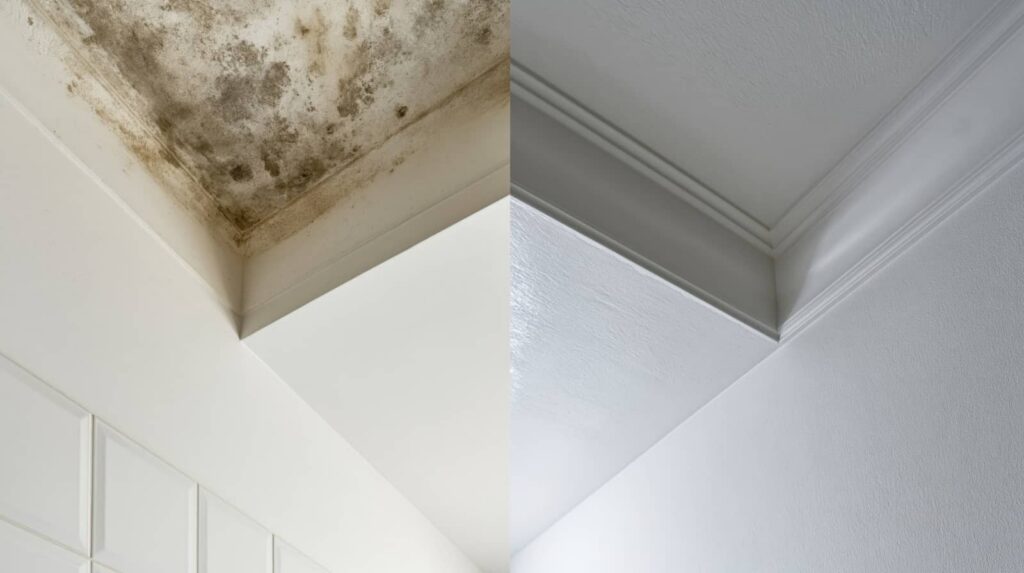
You’ll see your inspector review ceiling conditions, map stain edges, and trace leak sources with focused tools. They’ll look for sagging drywall, bubbling paint, soft spots, and active drips.
Expect a moisture meter, flashlight, and maybe a thermal camera to confirm where water’s traveled. You belong in the process, so ask questions as they go.
- Visual scan of seams and vents
- Moisture readings across affected zones
- Inspection of attic or upper plumbing
- Note-taking on stain patterns
- Clear next steps for access
Why Fast Mold Testing Prevents Bigger Repairs
Fast mold testing can stop a small moisture problem from turning into structural damage, because it lets you confirm contamination before materials keep breaking down.
You can catch mold growth while it’s still localized, so you won’t need to replace drywall, insulation, or framing later.
After water damage, speed matters: damp materials keep feeding spores, and delays raise repair costs.
Testing also helps you and your remediation team target the right rooms, trim demolition, and protect neighboring spaces.
When you act early, you stay in control, reduce downtime, and move back into a safe, familiar home sooner.
That’s the practical advantage: faster answers, smaller repairs, and less disruption for everyone in your household.
Frequently Asked Questions
How Much Does Mold Inspection After Water Damage Cost?
You’ll typically pay $300–$700 for post water damage mold inspection, depending on size, testing, and urgency. You’ll protect your home better when you prioritize mold inspection importance and act fast after leaks or flooding.
Do I Need to Leave Home During Mold Inspection?
Usually, you don’t need to leave; few inspections require it. You’ll stay unless technicians need access behind walls. The inspection process protects your mold health, and you’re part of the solution.
Can Insurance Cover Mold Inspection Expenses?
Yes, your insurance policies may cover mold inspection expenses if mold coverage applies and water damage caused the issue. You’ll need to review exclusions, document losses, and file promptly to strengthen your claim.
How Long Does a Mold Inspection Usually Take?
Usually, you’re looking at one to three hours—time flies when inspectors hunt like detectives. You’ll see varied inspection methods, assess mold growth, and get practical findings that help you feel informed, included, and ready.
Are Air Samples Always Necessary for Mold Testing?
No, you don’t always need air samples for mold testing. You can use inspection methods like visual checks and moisture mapping to identify mold types; air samples help when hidden growth or exposure risks need confirmation.
Review
After water damage, you need mold inspection fast because mold can begin growing within 24 to 48 hours. When you check moisture, inspect hidden cavities, and test affected materials, you catch problems before they spread. You also reduce health risks and keep repair costs lower. If you’ve had a leak, don’t wait for visible growth—schedule an inspection right away so you can protect your home, your indoor air quality, and your budget.
Recent Posts
24/7 Water Damage Cleanup Checklist
At 2 a.m., you notice water pooling under your laundry room wall, and you have
What Is 24 Hour Water Damage Cleanup?
If you’re dealing with a water emergency, 24 hour water damage cleanup gives you immediate
Ceiling Leak Mold Inspection Report Guide
If you’re dealing with a ceiling leak, you need to know how mold can develop,