
Contents
When dealing with a toilet backup, it’s essential to act quickly and methodically. Start by evaluating the situation to identify the cause of the backup. Next, prioritize safety by wearing protective gear and turning off the water supply. Initial cleanup steps involve containing the damage and using the right tools. But understanding the most effective tools and techniques can make all the difference in tackling this unpleasant issue. What comes next may surprise you.
Key Takeaways
- Turn off the water supply immediately to prevent further overflow and damage in case of a backup.
- Use towels or absorbent materials to soak up excess water and contain the affected area.
- Utilize a flange plunger for stubborn clogs and a cup plunger for general use to attempt clearing the blockage.
- Wear protective gear, including gloves and masks, to safeguard against contaminants during cleanup.
- Clean and disinfect all surfaces that came into contact with contaminated water to prevent health risks.
Assessing the Situation: Identifying the Cause of the Backup
When faced with a toilet backup, how can you quickly pinpoint the cause? Start by checking for common clog causes. Often, excessive toilet paper or non-flushable items lead to blockages. If you suspect this, try using a plunger. Position it over the drain, and pump vigorously for 20-30 seconds.
If this doesn’t work, move on to inspecting the toilet’s trap.
Next, assess whether plumbing issues extend beyond your toilet. A backup can indicate a larger sewer line problem. Check for gurgling sounds in other drains or slow draining sinks, as these can signify a more extensive clog in the plumbing system.
If you notice these signs, it’s wise to call a professional plumber who can evaluate the situation more thoroughly. Identifying the source of your backup quickly can save time and prevent further damage, ensuring your bathroom remains a space of comfort and hygiene.
Safety Precautions: Protecting Yourself and Your Property
To ensure your safety and protect your property during a toilet backup cleanup, it’s vital to take specific precautions. Start by wearing appropriate protective gear, including gloves, masks, and waterproof boots. These items shield you from harmful bacteria and contaminants that can be present in the wastewater.
Next, make certain you have proper sanitation practices in place. This involves using disinfectants to clean all surfaces that have come in contact with the backup. Make sure to ventilate the area to minimize exposure to any unpleasant odors and airborne pathogens.
Additionally, consider shutting off the water supply to prevent further overflow. Always keep a first aid kit accessible in case of minor injuries.
Initial Cleanup Steps: Containing the Damage
As you begin the cleanup process after a toilet backup, it’s important to act quickly to contain the damage and prevent further contamination.
First, turn off the water supply to stop the toilet overflow. This is a vital step in your emergency response.
Next, use towels or absorbent materials to soak up excess water, carefully avoiding direct contact with contaminants. If possible, create barriers with plastic sheeting to isolate the affected area from the rest of your home.
Once you’ve contained the overflow, remove any items that may have come into contact with the contaminated water. Place them in garbage bags for disposal.
Properly ventilate the area by opening windows or using fans to promote air circulation.
Effective Tools and Products for Cleanup
To effectively tackle a toilet backup, you’ll need the right tools and products at your disposal.
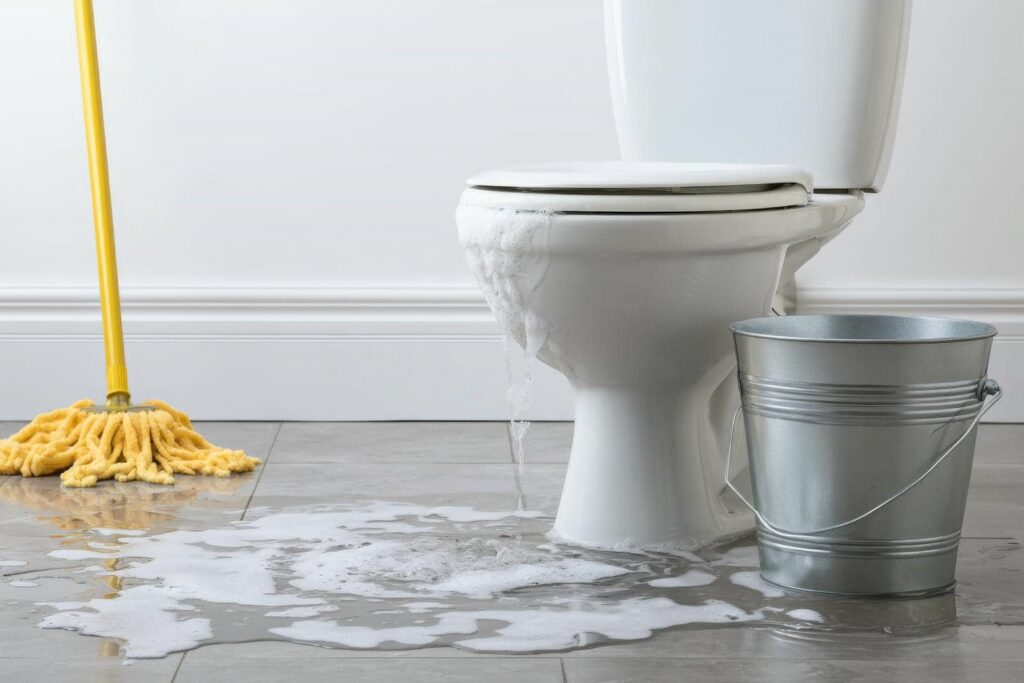
Gather essential cleanup supplies like gloves, mops, and buckets, along with recommended cleaning solutions that can disinfect and neutralize odors.
Having these items ready ensures a thorough and efficient cleanup process.
Essential Cleanup Supplies
When dealing with a toilet backup, having the right cleanup supplies on hand is essential for an effective and efficient response.
Start by creating a cleanup supply checklist that includes a variety of toilet plunger options—such as a flange plunger for stubborn clogs and a cup plunger for general use. You’ll also need heavy-duty rubber gloves, disinfectant wipes, and absorbent towels.
A bucket for waste disposal and a shop vacuum can greatly ease the cleanup process. Don’t forget a face mask to protect against unpleasant odors and potential contaminants.
Ensuring you have these tools ready helps you tackle the situation promptly and fosters a sense of community as you share knowledge and resources with others facing similar issues.
Recommended Cleaning Solutions
Effective cleanup after a toilet backup requires specific cleaning solutions that tackle both the mess and any harmful bacteria.
Start with a high-quality toilet cleaner designed to eliminate germs effectively. Look for products that contain bleach or other disinfectants; these are essential for thorough sanitation.
If you’re concerned about the environment, consider eco-friendly options that still pack a punch against bacteria, such as plant-based cleaners or those certified by green organizations.
After applying the cleaner, let it sit for the recommended time to ensure maximum effectiveness. Additionally, use heavy-duty gloves and disposable cleaning cloths to maintain hygiene during the process.
Professional Help: When to Call a Specialist
How can you tell if a toilet backup is a simple clog or a more serious issue? If plunging doesn’t resolve the problem within a few attempts, it’s time to contemplate professional help.
Persistent backups often signal deeper plumbing issues, such as tree root infiltration or damaged sewer lines.
If you notice multiple drains backing up or sewage odors, don’t hesitate to call emergency plumbing services. These situations require immediate attention to prevent extensive damage and costly repairs.
Moreover, if you’ve already tried various residential services without success, it’s best to let specialists handle it. They’ve the expertise and tools to diagnose the issue accurately and resolve it efficiently.
Preventative Measures: Avoiding Future Toilet Backups
To prevent future toilet backups, you need to prioritize regular maintenance checks and proper waste disposal practices.
Check for clogs and wear in your plumbing system periodically to catch issues early.
Additionally, educate everyone in your household on what can and can’t be flushed to minimize risks.
Regular Maintenance Checks
While many homeowners may overlook the importance of regular maintenance checks, these proactive measures can greatly reduce the risk of toilet backups.
Implementing a consistent schedule for toilet maintenance is essential. Start by conducting regular inspections, checking for leaks, and ensuring all components function properly. Pay attention to the flapper valve and fill valve, as these are critical for proper operation.
Additionally, inspect the toilet’s flush mechanism to prevent clogs. Cleaning the toilet and its surrounding plumbing helps maintain peak flow.
Don’t forget to clear any visible obstructions in the bathroom, like hair and debris. By prioritizing these maintenance routines, you’ll foster a reliable bathroom environment, minimizing the chances of inconvenient toilet backups in the future.
Proper Waste Disposal
Since improper waste disposal is a leading cause of toilet backups, it’s essential to educate household members about what can and can’t go down the toilet.
Follow proper waste management practices by adhering to disposal guidelines. Only human waste and toilet paper should enter the toilet. Avoid flushing items like wipes, feminine products, or any non-biodegradable materials, as they can cause severe blockages.
Implement a system for disposing of these items in the trash instead. Regularly remind everyone in your household about these guidelines to foster a culture of responsible waste disposal.
Frequently Asked Questions
Can a Plunger Effectively Resolve All Toilet Backups?
A plunger can resolve many toilet backups, but it has limitations. For persistent issues, consider backup prevention methods like regular maintenance, educating household members about proper usage, and addressing underlying plumbing problems promptly.
What Household Items Can I Use for Toilet Backup Cleanup?
You can use white vinegar, baking soda, or dish soap for toilet cleaning after a backup. For backup prevention, maintain regular cleaning and avoid flushing non-degradable items. These steps ensure a smoother, cleaner experience for everyone.
How Can I Tell if Sewage Is Involved in the Backup?
If sewage is involved in the backup, you’ll notice sewage odors wafting like a storm cloud. Backup indicators include unusual toilet sounds, water discoloration, and slow drainage. Trust your instincts; investigate further if you suspect sewage.
Are There Eco-Friendly Products for Cleaning Toilet Backups?
Yes, there are eco-friendly cleaners specifically designed for toilet backups. Look for biodegradable solutions that effectively break down waste without harming the environment. These products maintain hygiene while supporting your commitment to sustainability and responsible cleaning practices.
How Often Should I Inspect My Plumbing to Prevent Backups?
You should inspect your plumbing at least once a year for effective plumbing maintenance. Regular checks help identify potential issues early, ensuring backup prevention and maintaining a smooth, reliable drainage system in your home.
Summary
Tackling a toilet backup requires swift action and careful planning. By turning off the water supply, wearing protective gear, and following effective cleanup steps, you can minimize damage and ensure safety. Remember, an ounce of prevention is worth a pound of cure; taking preventative measures now can save you from future headaches. If the situation escalates, don’t hesitate to call a professional. Your health and home are worth the investment.
Recent Posts
What Is 24 Hour Water Damage Cleanup?
If you’re dealing with a water emergency, 24 hour water damage cleanup gives you immediate
Ceiling Leak Mold Inspection Report Guide
If you’re dealing with a ceiling leak, you need to know how mold can develop,
5 Tips for Mold Inspection Reports
When you review a mold inspection report, you need to check more than just the