
Contents
When water damage hits, you need to act fast or the problem spreads. Start by shutting off the main supply and power, then document everything before you remove standing water. Emergency Water Damage Restoration should begin as soon as possible to dry the structure, prevent further damage, and reduce the risk of mold growth. After that, you’ll need to check for hidden moisture and know when to bring in a 24-hour restoration pro. Each step matters, and skipping one can cost you more than you expect.
Key Takeaways
- Shut off the main water supply immediately to stop further flooding from burst pipes or leaks.
- Turn off electricity in affected areas if water reaches outlets, appliances, or electrical panels.
- Remove standing water quickly using towels, wet vacuums, pumps, or squeegees.
- Move furniture, rugs, and electronics to dry areas and document all damage with photos and notes.
- Dry the area with fans, dehumidifiers, and ventilation, then call a certified restoration professional.
Stop Burst Pipe Water Damage Fast
Shut off the main water supply immediately to stop the flow from a burst pipe, then cut power to any affected areas if water is near outlets, appliances, or the electrical panel. You’ll limit spreading damage and protect your home crew from avoidable hazards.
Next, move furniture, rugs, and electronics out of the wet zone, and place aluminum foil or blocks under small legs to reduce contact. Use towels or a wet vacuum to remove standing water fast. Open windows and run fans if conditions allow to improve airflow.
Document damage with photos for claims, and inspect nearby walls and ceilings for swelling. Stock emergency kits with towels, gloves, flashlights, and tape. Add preventive measures like pipe insulation and winter checks so your household stays ready and resilient.
Shut Off Water and Power Safely
First, locate your main water shutoff valve and close it to stop additional flooding.
Then disconnect electrical power at the breaker only if you can reach it safely without standing in water.
If you can’t access the panel safely, wait for a qualified professional to cut power.
Locate Main Shutoff
If water is still flowing, locate your main shutoff valve immediately and close it to stop additional flooding; then cut power at the breaker panel only if you can reach it without standing in water or touching wet electrical components.
Check your pipe location near the meter, basement wall, utility closet, or crawlspace so you can act fast under stress. Keep shutoff accessibility clear by removing stored items, labeling the valve, and showing every household member where it sits.
Turn the valve clockwise until it stops, then test nearby faucets to confirm pressure drops. If the valve sticks, don’t force it; call your utility or a plumber.
Staying prepared helps you protect the space, your crew, and the next steps in restoration.
Disconnect Electrical Power
Once you’ve stopped the water source, cut electrical power at the main breaker only when you can do so without standing in water or reaching across damp surfaces.
If the panel is wet, call a licensed electrician or utility provider instead. You’re protecting everyone in the space, and that shared caution matters.
After the main switch is off, verify that each circuit breaker is in the off position if you need to isolate affected areas.
Keep your hands dry, use a flashlight, and avoid metal tools near the panel.
Electrical safety comes first because hidden moisture can energize outlets, appliances, and framing.
If you smell burning, hear buzzing, or see sparking, leave immediately and wait for professionals to clear the area.
Document the Damage for Insurance
Take clear photos and videos of every affected area before you move or discard anything. Capture wide shots, then close-ups of walls, floors, baseboards, furniture, and appliances so your damage assessment is complete. Include date-stamped images if your device allows it.
Keep a written log of what was damaged, when you noticed it, and any actions you’ve taken. Save receipts, repair estimates, and policy details in one folder for fast insurance claims. If safe, mark affected items with notes or labels so you can match each photo to a specific object.
Back up everything to cloud storage or email copies to yourself. When you speak with your insurer, share facts only and stay consistent. Careful documentation helps your team protect your claim and keeps your recovery moving.
Remove Standing Water Immediately
Move standing water out as quickly as you can to limit structural damage, mold growth, and electrical hazards.
First, shut off power to affected areas if it’s safe, then start water extraction techniques with a wet/dry vacuum, submersible pump, or squeegee and bucket. Work from the lowest point toward exits so you don’t trap water in corners.
Use emergency equipment usage carefully: wear gloves, boots, and eye protection, and never run powered tools in pooled water unless they’re rated for wet environments.
If the water is deep, contaminated, or spreading fast, call a certified crew right away. You’re not handling this alone; a fast, coordinated response protects your space, your people, and your next restoration steps.
Dry Walls, Floors, and Ceilings
After water removal, dry walls, floors, and ceilings fast to stop swelling, warping, and mold growth. Open windows if weather helps, run fans, and place dehumidifiers to pull hidden moisture from framing, drywall, and subflooring.
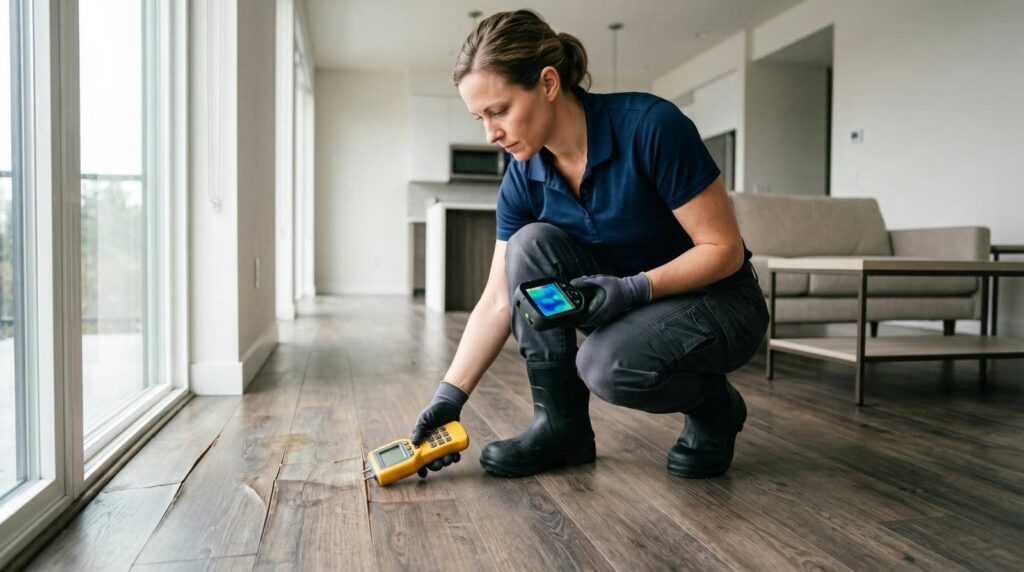
Use moisture detection tools to track readings at baseboards, corners, and ceiling joints, because surfaces can feel dry before they’re stable. Move furniture away so air can circulate on all sides, and lift rugs or padding if they trapped water.
Focus drying techniques on the wettest zones first, then shift equipment as readings drop. Keep HVAC running if it doesn’t spread contaminants.
You’re not alone in this process; steady, methodical drying protects your home and gets your space back to normal faster.
Look for Mold After Cleanup
After cleanup, inspect walls, floors, and ceilings for visible mold, including discoloration, fuzzy patches, and musty odors.
Check hidden areas like behind baseboards, under flooring, and inside wall cavities, since mold can grow where moisture lingers.
If you spot any signs, act quickly to remove the source and prevent further spread.
Visible Mold Signs
Even after cleanup, you should inspect damp areas for visible mold growth, discoloration, or a musty odor, since mold can start forming within 24 to 48 hours.
Check walls, baseboards, flooring, insulation edges, and behind moved furniture for spots that look green, black, white, or fuzzy. If you see staining that spreads, soft surfaces that look damp, or dust-like growth, treat it as active mold.
Use mold prevention strategies like immediate drying, dehumidification, and keeping indoor humidity low. If growth is small, follow approved mold removal techniques and wear gloves, a mask, and eye protection.
Don’t paint over it or ignore it. Your quick response helps protect your home, your health, and the people in your space.
Hidden Growth Checks
Mold often grows out of sight, so you need to check hidden spaces after cleanup, not just visible surfaces. Open cabinets, move furniture, and inspect baseboards, wall cavities, and under flooring.
Use a flashlight and a moisture meter to find hidden moisture behind drywall, under sinks, and around HVAC returns. If you smell a musty odor, treat it as a warning and keep investigating.
Replace damp insulation, remove wet materials, and dry the area completely with airflow and dehumidification. Document each check so your team stays coordinated and nothing gets missed.
This disciplined review supports growth prevention and helps you catch small issues before they spread. When you work carefully, you protect your space, your people, and your recovery progress.
Call a 24-Hour Restoration Pro
When water damage strikes, call a 24-hour restoration pro right away so they can start mitigation before moisture spreads and causes deeper structural harm.
You need fast emergency response because standing water, soaked insulation, and hidden cavities can escalate damage within hours. A qualified team brings moisture meters, truck-mounted extraction, air movers, and dehumidifiers to stabilize the site.
Their professional services also include documenting losses, identifying safety hazards, and coordinating with your insurer, so you’re not handling everything alone.
Stay clear of affected areas, shut off power if it’s safe, and share access details when the crew arrives. Acting quickly helps protect your home, limit repairs, and keep you connected to experts who know how to restore your space.
Frequently Asked Questions
How Can I Tell if Water Damage Is Hidden Behind Walls?
You can spot hidden water damage behind walls by watching for stains, swelling, musty odors, and soft drywall. Use moisture detection tools to confirm hidden leaks early, so you’ll protect your space and community.
What Personal Items Are Safest to Salvage After Flooding?
You’ll salvage hard, nonporous items first—metal, glass, sealed plastics, and valuables. Ironically, your best sentimental wins often aren’t soft things. Prioritize furniture preservation and document recovery; discard soaked textiles, mattresses, and anything moldy.
How Soon Should Carpets Be Replaced After Water Exposure?
You should replace carpets within 24–48 hours if carpet drying stalls or replacement signs appear, like odors, staining, or padding separation. Act fast to protect your space, reduce mold risk, and keep your home feeling safe.
Does Homeowner’s Insurance Cover Sewer Backup Damage?
Usually, you’ll need a sewer backup endorsement; standard policies often exclude it. Check your policy, document damage, and file insurance claims fast—like floodgates opening, time matters. You’ll protect your home and your place.
What Should I Do if the Water Smells Like Sewage?
You should treat it as sewage contamination, identify sewage odor sources, and avoid contact. Shut off water, ventilate, and call professionals. Health risks include bacteria and parasites, so you shouldn’t enter affected areas.
Conclusion
When a pipe bursts, don’t stand there admiring your indoor lake. Shut off the water and power fast, document the mess like a detective, and haul out every last puddle before it turns your home into a swamp. Dry everything thoroughly, then inspect for mold as if it’s plotting a comeback. If the damage looks bigger than your patience, call a 24-hour restoration pro and let the experts wrestle your walls back to normal.
Recent Posts
What Is 24 Hour Water Damage Cleanup?
If you’re dealing with a water emergency, 24 hour water damage cleanup gives you immediate
Ceiling Leak Mold Inspection Report Guide
If you’re dealing with a ceiling leak, you need to know how mold can develop,
5 Tips for Mold Inspection Reports
When you review a mold inspection report, you need to check more than just the