
Contents
When you review a mold inspection report, you need to check more than just the summary. You should verify the inspection date, affected areas, moisture readings, lab results, and photo documentation, then compare those details against what the field notes show. If the report maps the damage clearly, it can guide repairs and claims more effectively, but the real value often depends on what’s documented next.
Key Takeaways
- Include the inspection date, affected room, and clear photo references.
- Document visible staining, growth patterns, odors, and peeling paint or dampness.
- Record calibrated moisture readings at affected and unaffected locations.
- Note identified mold types, sample locations, and how results compare with lab data.
- Use the report to guide repairs, prioritize damage, and support insurance claims.
What’s Included in a Ceiling Mold Report
A ceiling mold report typically includes the inspection date, affected room or area, visible staining or growth patterns, moisture readings, material conditions, and the likely source of intrusion.
You’ll also see notes on ceiling materials, such as drywall, plaster, or acoustic tile, because each one responds differently to moisture.
The report should identify mold types when sampling or visual indicators support it, and it should distinguish between probable surface growth and deeper contamination.
You can expect objective measurements, photo references, and a clear description of damaged areas.
A well-written report helps you compare findings, track conditions, and understand whether the issue stays localized or extends beyond the visible ceiling plane.
That detail gives you confidence that you’re part of the inspection process.
How to Spot Mold After Storm Damage
After storm damage, you can spot mold by checking for persistent dampness, discoloration, and musty odors in areas that stayed wet for more than 24 to 48 hours.
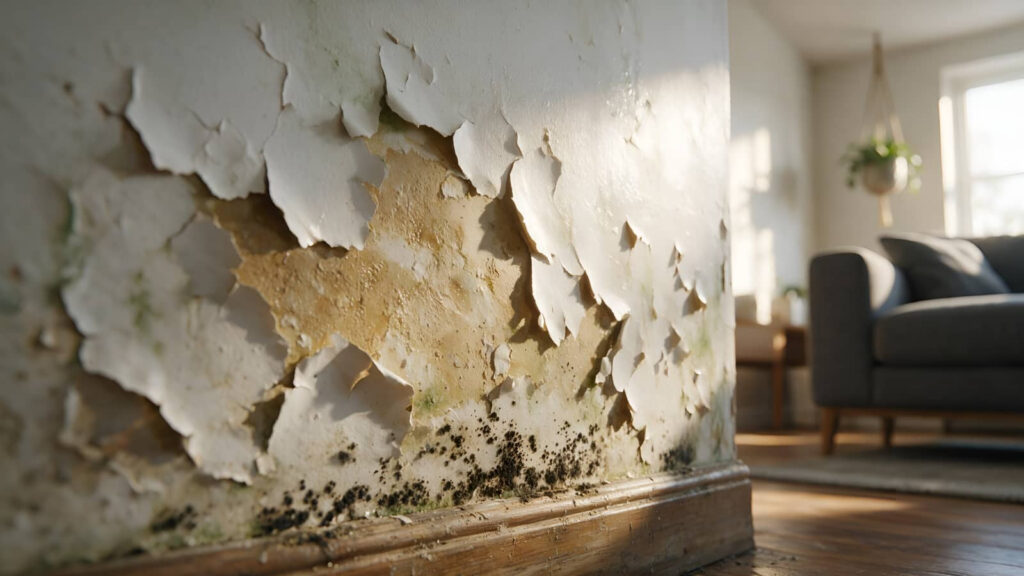
During storm damage assessment, inspect trim, drywall seams, baseboards, and insulation for fuzzy growth, staining, or surface texture changes.
Use mold identification techniques that prioritize visible evidence, odor mapping, and moisture history, since early colonies often hide behind finishes.
You’re not alone in this process; careful observation helps protect your home and your group’s health.
- Dark spots signal possible active growth
- Peeling paint often means trapped moisture
- A stale odor can confirm hidden contamination
How to Test Moisture in Ceilings and Walls
To test moisture in ceilings and walls, start with a calibrated moisture meter and compare readings across affected and unaffected areas to identify abnormal saturation.
You’ll want to map each reading by location, because patterns matter during wall inspections. Use pin or pinless moisture meters according to the material, and keep the probe contacts steady for consistent results.
Check seams, baseboards, ceiling corners, and areas near plumbing or roof penetrations, since hidden moisture often migrates there. Record each value, note temperature or humidity changes, and retest after drying if needed.
If readings stay elevated, you’re likely seeing active intrusion, not just surface dampness. By using the same method every time, you’ll join other careful inspectors who document conditions with accuracy and confidence.
How to Read Mold Inspection Results
When you review mold inspection results, compare the lab data, field notes, and moisture readings together, because no single result should stand alone. You’ll see whether the inspector sampled dust, air, or surfaces, and each inspection method changes what the numbers mean.
Match the reported mold types with visible staining, odors, and damp materials, then check whether counts or colonies rise in the same areas.
- You may feel reassured when results align.
- You may feel concerned when hidden moisture persists.
- You may feel confident when patterns are consistent.
Look for clear labels, sample locations, and comparison points. If the report separates indoor and outdoor baselines, use them to judge relative concentration.
Stay objective, stay connected, and trust the pattern, not one isolated value.
How to Use the Report for Repairs and Claims
Once you’ve compared the lab data, field notes, and moisture readings, use the report to guide the next steps for repairs and claims.
You can map each affected area to a specific repair scope, then assign priorities based on moisture levels, material type, and visible damage.
Share the report with your contractor so the repairs process stays aligned with documented conditions.
For insurance or warranty requests, attach photos, test results, and timelines as claims documentation.
Keep copies of every estimate, invoice, and communication so your file stays complete.
If the report notes hidden moisture or possible contamination, request follow-up verification after remediation.
Frequently Asked Questions
How Often Should Mold Inspections Be Scheduled?
You should schedule mold inspections annually, or every six months in high-humidity or leak-prone spaces; your mold inspection frequency should follow seasonal inspection recommendations, especially after storms, renovations, or any moisture incident.
Are Mold Inspectors Required to Be Licensed?
Not always; you’ll find licensing varies by state. Nearly 30 states regulate mold work. Check mold inspector qualifications and mold inspection standards so you can trust the report and feel confident joining informed property owners.
What Should I Ask Before Hiring a Mold Inspector?
Ask about their mold inspector qualifications, certifications, experience, sampling methods, report format, and inspection pricing. You’ll also want to confirm whether they’re independent, insured, and can explain findings clearly so you feel informed and included.
Can Mold Reports Be Used During Home Purchases?
Yes—you can use mold reports during home purchases; they’re often deal-making, deal-breaking documents. You’ll evaluate mold report implications, negotiate repairs, and weigh homebuyer considerations objectively, so you’re not buying hidden problems alone.
Do Mold Inspections Include Hidden Crawl Space Areas?
Yes, you’ll usually get crawl space coverage if you request it; inspectors check hidden mold in accessible areas, using moisture meters and visual probes. You’ll belong better informed, with fewer surprises during your purchase.
Recap
When you review a mold inspection report, you can turn scattered findings into a clear repair plan. Check the inspection date, affected areas, moisture readings, and visible growth, then compare lab results with field observations. Use photo references and mapped damage to guide targeted work. Share the report with contractors and insurers so everyone’s on the same page. A solid report is your blueprint—without it, you’re just guessing in the dark.
Recent Posts
3 Best 24-Hour Water Damage Repair Options
A lot of people in the U.S. face water damage emergencies every day, so you
24/7 Water Damage Repair Guide
A flooded room can look minor at first, then turn severe within hours. You need
Leak Mold Inspection and Testing Guide
Most ceiling leaks hide moisture beyond the visible stain, so you can’t rely on surface